OpenFile take: Cloudiness and soft gels are usually solubility and handling problems — concentration, solvent, pH, or temperature — not proof that a brief shake destroyed the peptide.
Start here before you panic
A freshly mixed research vial that looks milky or sets into a soft gel is a common bench complaint. Community threads (including research-oriented Reddit discussions on cloudy mixes and gelling) and short-form videos circulate fixes ranging from “add more water” to “add acetic acid.” This hub organizes those failure modes for lab buyers without copying anyone’s images or posting medical advice.
Everything here is Research Use Only. Persistent particles, discoloration, or off-odor are discard signals — send a sample for third-party testing if the lot’s integrity is in doubt.
Causes: aggregation, concentration, solvent, pH
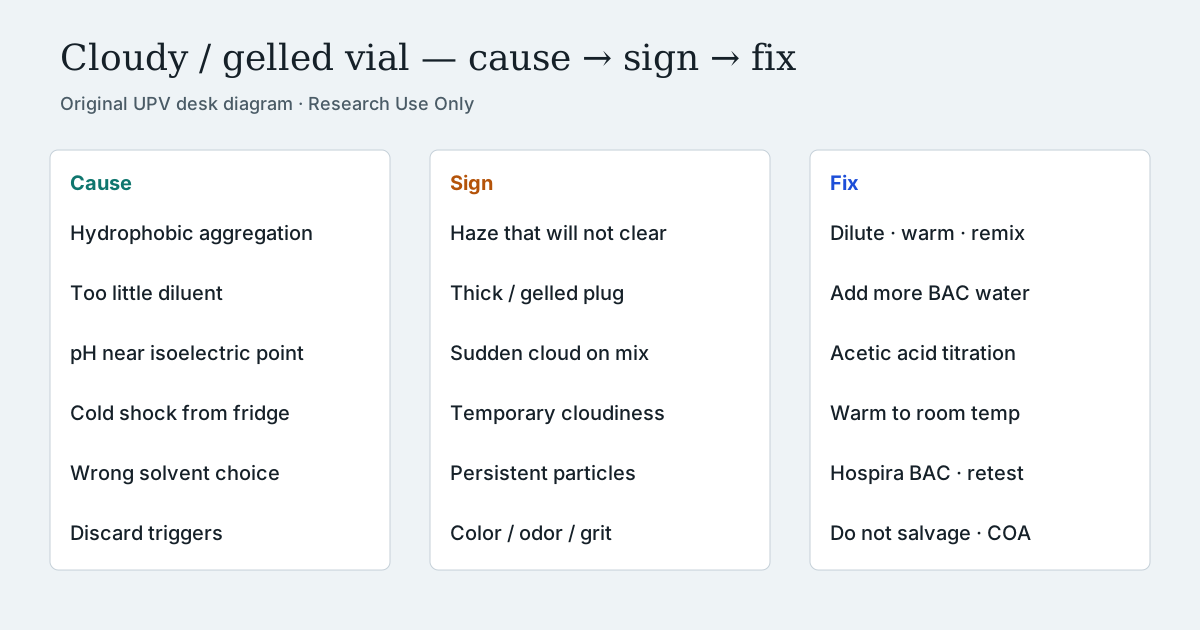
Hydrophobic stretches can drive molecules to associate once they are hydrated, especially at high concentration. Too little diluent for the milligram load is a frequent gel trigger.
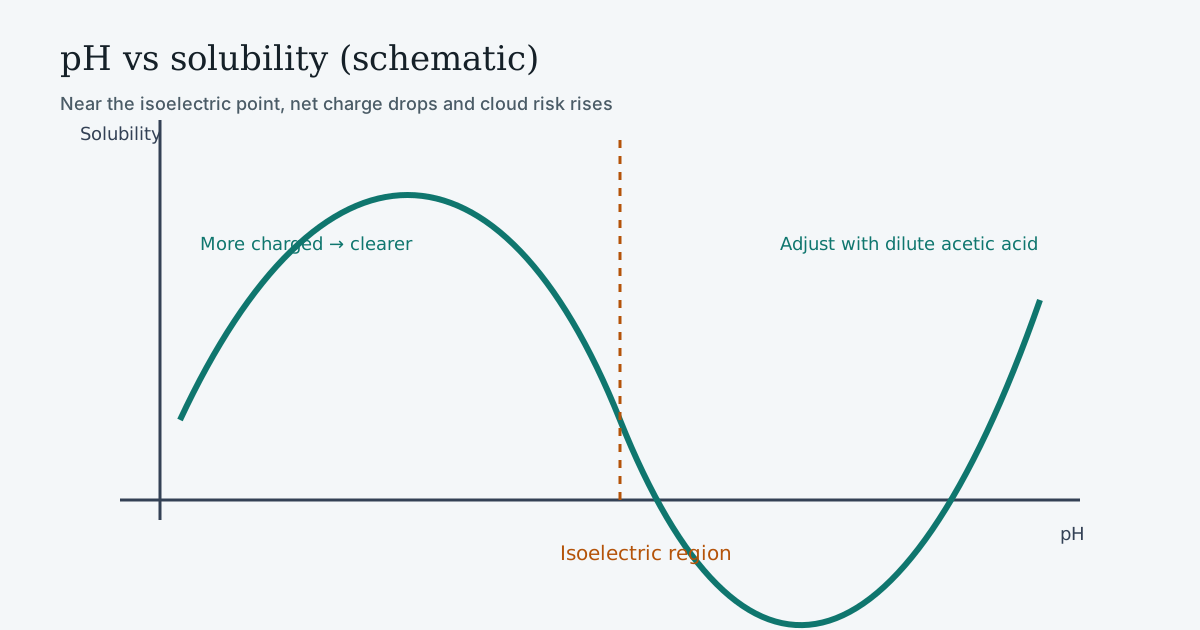
Solvent choice matters. Sterile water and bacteriostatic water are not interchangeable for every protocol; pH near a peptide’s isoelectric point reduces net charge and can drop solubility sharply. Our schematic diagram marks that valley without pretending to be a full titration curve for every SKU.
Fixes that usually belong in the notebook first
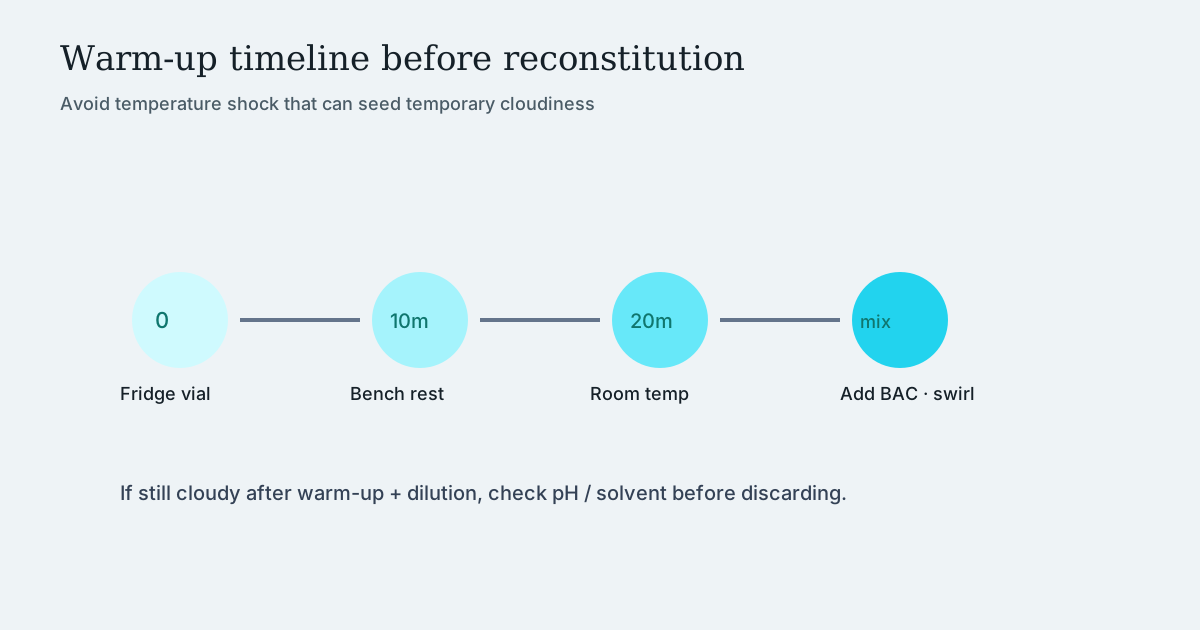
Let a refrigerated vial warm toward room temperature before mixing — cold shock alone can look like failure. Add more compatible diluent if the cake was under-dissolved. For pH-sensitive cloudiness, careful titration with dilute acetic acid is a documented research-buyer tactic on stubborn hydrophobic peptides.
Many lab buyers prefer Hospira-labeled bacteriostatic water when a protocol calls for BAC. Pair reconstitution solvent pages with the peptide SKU on Purgo using Code WINTER: 20% off everything, 25% off GLPs.
Myth-bust: shaking did not “create” the gel
Forum culture often blames shaking for haze. Solubility chemistry is the better first suspect. Interlink: our shaking article covers why brief agitation is routine in testing labs. Some practical reports note that about a minute of firm shaking can help disperse a soft gel after you have corrected concentration or pH — shaking is a tool, not a curse word.
When to discard and retest
If cloudiness survives warm-up, dilution, and rational pH/solvent adjustments — or if you see grit, color shift, or smell something wrong — do not keep pushing. Discard per your lab’s SOP and consider third-party HPLC on a retained sample or a new vial from a transparent vendor.
Peptide-specific follow-ons
Continue to the Tesamorlin, GLP-3 R, kisspeptin cloudy, kisspeptin gelled, and AOD-9604 notes for SKU-specific angles. Each page links back here and to the shaking article.
FAQ
Is a cloudy vial always ruined?
Not always — temperature shock and under-dilution can look dramatic and still clear. Persistent haze, particles, color, or odor after fixes are discard territory.
Does shaking cause gelling?
Usually no. Gelling tracks with hydrophobicity, concentration, solvent, and pH. See the shaking article for lab context.
What is Code WINTER?
Purgo Labs offer language we display on affiliate cards: Code WINTER: 20% off everything, 25% off GLPs. RUO still applies.